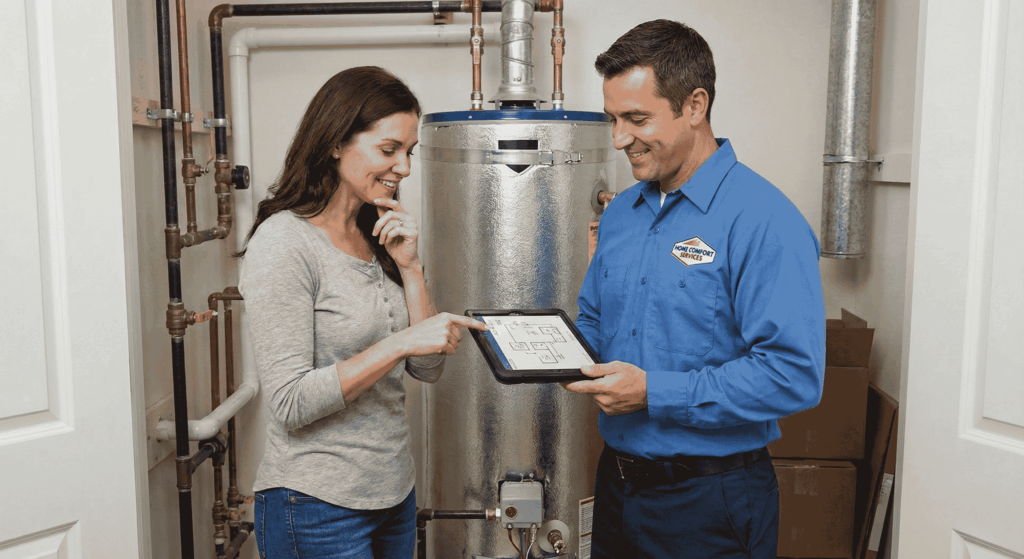

Knowing the difference between tank and tankless water heaters helps Essex County homeowners make a smarter, more informed decision about their hot water system.
Tankless water heaters heat water only when needed, which removes standby heat loss and delivers reliable hot water on demand. A traditional tank water heater stores 40 to 60 gallons of pre-heated water at all times, ready to use but continuously consuming energy.
The best choice depends on your household size, budget, and how long you plan to stay in your home. As hot water tank rentals are also an option. Discover the pros and cons of each system below and find out which is better for your home.
How Tank Water Heaters Work
A water line fills a holding tank with cold water and the core heater gets it to a set temperature. That heated water sits in the tank until someone uses it. When a tap opens, the hot water flows out and cold water refills from the bottom, starting the heating cycle again.
A tank water heater uses energy to maintain temperature, heating water all the time even when no one is home. This is called standby heat loss, and it accounts for 25 to 35 percent of annual water heating costs. The amount of water a water heater produces per cycle is limited by tank size. A standard 40-gallon unit runs out after two to three back-to-back showers, which falls short for families of four or more during a busy morning. Gas units reheat water faster than electric models, but even gas units take 30 to 40 minutes to fully recover after the large tank empties.
Tank water heaters last 8 to 12 years in Ontario. Essex County hard water accelerates sediment buildup inside the holding tank, which shortens that range. Annual flushing removes that sediment and adds two to four years of useful life.
How Tankless Water Heaters Work
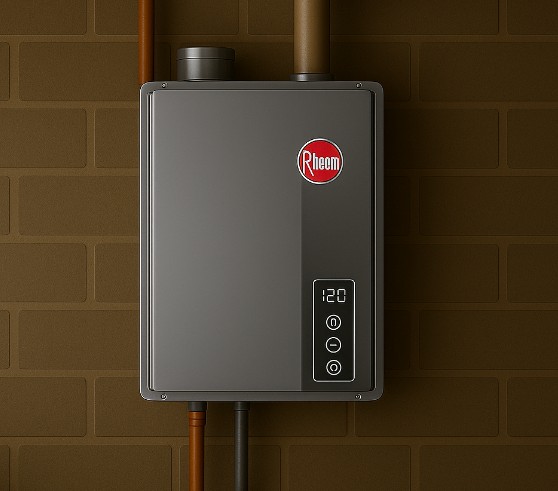
A modern tankless water heater works differently. Instead of storing hot water, it heats incoming water the moment a tap opens. Cold water travels through a heat exchange, reaches the target water temperature within seconds, and flows directly to the tap. The unit stops working as soon as the tap closes, so it only uses energy when there is active hot water demand.
Gas-powered tankless hot water units operate at 90 to 95 percent thermal efficiency. ENERGY STAR certified models cut energy use by up to 30 percent compared to standard tank units. A properly sized tankless unit keeps water even across multiple simultaneous draws, so two showers running at once will not cause a temperature drop. Over a 20-year service life, those savings total $1,500 to $1,800 for the average household.
The space savings are a practical bonus. A tankless unit mounts on a wall and takes up about as much room as a carry-on suitcase, which matters in the smaller utility rooms common to newer Windsor-Essex homes. The main tradeoff is a higher upfront installation cost and, in some homes, if their is a need for a new gas line or electrical upgrade before installation.
Cost Comparison: Tank vs. Tankless in Windsor-Essex County
Understanding what each system costs upfront and over time makes it easier to budget with confidence.
Tank Water Heater Costs
The installation of a tank water heater in Windsor Essex County runs $900 to $1,500. A tank water heater is usually the lower-cost option at the time of purchase. Replacing a tank in a home with an existing gas line and compatible venting requires no major infrastructure changes. Repair costs typically run $150 to $400, and most local technicians carry the necessary parts on the truck.
Tankless Water Heater Costs
The cost of a tankless water heater installation in Windsor Essex County runs $2,500 to $3,500. Installing a tankless water heater in homes built before 1990 often requires a gas line upgrade to support the higher BTU demand, which adds $300 to $800 to the total. Gas tankless models deliver the best efficiency results where natural gas is available. Electric tankless water heaters work for homes without a gas connection, though they produce lower flow rates than gas units. Gas water heaters of either type reach the energy savings break-even point within 6 to 8 years.
How Essex County Hard Water Affects Both Systems
In areas with hard water like Essex County, elevated calcium and magnesium levels reduce equipment life and increase water use if maintenance is skipped. Both systems are affected, but in different ways.
In tank systems, minerals sink to the tank floor and form a layer between the burner and the water. This forces the unit to heat your water longer and draws more energy over time. Annual flushing removes that mineral layer and keeps the tank running at full efficiency.
In tankless systems, minerals build up inside the heat exchanger and reduce its ability to transfer heat. Left untreated, the buildup causes the unit to shut down as a protective measure. Dependable Hot Water recommends descaling tankless units every five years in Essex County. Adding a water softener reduces mineral deposits in both system types and extends the time between service visits.
Choosing the Right System for Your Situation
How much hot water you use daily is the most reliable starting point. Traditional water heating with a tank suits lower-demand households well. Going tankless makes clear sense for higher-demand homes and businesses.
Consider a Tank Water Heater If:
- Your total installation budget is under $1,500
- You plan to sell the home within three to five years
- A water heater might be sufficient for a one- or two-person household with moderate daily use
- Your home experiences frequent power outages and stored hot water provides a useful backup
Going Tankless Is the Right Choice If:
- Your household has three or more people with overlapping hot water demand each morning
- Your current tank is 10 years or older and nearing the end of its service life
- You manage rental properties and want a longer-lasting, lower-maintenance system
- You run a restaurant, hotel, or any business where continuous hot water is essential — commercial properties can also install multiple tankless units in a cascade to handle high-volume demand
Tankless water heaters are worth the investment for homeowners with long-term plans. Dependable Hot Water services all major brands including Rheem, Navien, Rinnai, Bradford White, and A.O. Smith across Essex County and can help you determine which option is better for your home.
Safety and Installation Standards in Ontario
Water heater installation in Ontario requires TSSA (Technical Standards and Safety Authority) compliance for all gas-fired systems. Gas water heaters tend to have specific venting, gas line sizing, and combustion air requirements that must meet code. Skipping these steps creates carbon monoxide risks and voids manufacturer warranties.
A licensed technician from Dependable Hot Water reviews your venting setup, gas line capacity, and electrical service on every installation visit. All work follows Ontario Building Code requirements and TSSA standards, with permits secured before any job starts.
Get the Right System Installed by a Local Expert
Replacing a hot water heater is one of the higher-value decisions you make as a homeowner. Going tankless delivers better long-term value for households planning to stay put. Tankless water heaters cut standby energy waste, lower monthly bills, and last more than 20 years with proper care, comfortably outlasting two consecutive traditional hot water tank replacements.
Dependable Hot Water serves Windsor, Leamington, Kingsville, Tecumseh, LaSalle, Amherstburg, Essex, and surrounding communities with honest assessments and clear pricing before any work begins. Call (519) 965-3498 any time, day or night, to speak directly with a licensed local technician.
Routine appointments are available within 48 hours and emergency service runs 24 hours a day across all of Windsor-Essex County.